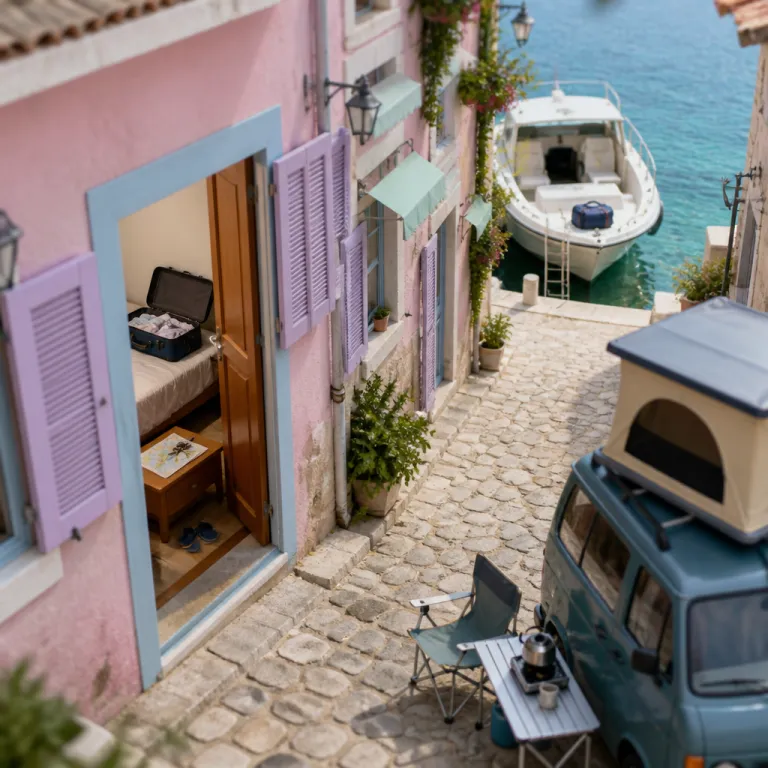
How to Find the Best Family Hotels in Croatia in July
How to read July prices when searching for the best hotels in Croatia
On the Dalmatian coast in July, every hotel seems full and every rate looks high. Yet the best hotels in Croatia for families share patterns that separate a justified premium from a simple peak-season markup. When you book with clear criteria, you can still secure a luxury stay that feels like value rather than a splurge you regret.
Start with the full stay cost, not just the headline room rate that appears low at first glance. A family-friendly luxury hotel that includes breakfast, kids’ activities, and airport transfers can beat a cheaper room once you factor in meals, taxis, and paid extras. According to recent accommodation surveys by Croatian tourism bodies and internal MyCroatiaStay price tracking, private apartments along the Dalmatian coast typically range from about €60 to €120 per night in summer; treat this as an indicative benchmark rather than a fixed tariff, and compare it with hotels that bundle services. Look for transparent star-rating details, clear policies on free cancellation, and whether parking, kids’ beds, and access to the spa are included or charged per day.
Value in the best hotels Croatia showcases is also about time, not only money. A coastal resort with a serious hotel spa, on-site restaurants, and a sheltered beach can save you hours of transfers with tired children. When you compare hotel and resort options, use the view-map tool on booking engines, then cross-check the main content on the hotel website to see how far you really are from the sea, the Old Town, and family-friendly swimming spots. As a rough guide, transfers from Split Airport to central Split hotels usually take 30–40 minutes by road, while Dubrovnik Airport to the Old Town area is often around 25–35 minutes, so a resort that shortens these journeys can be worth a modest rate premium.
Families should also read guest reviews with a high–low filter, not just the overall rating. Sort from low–high to see what consistently frustrates guests in July, such as crowded pools, noisy corridors, or weak air conditioning in older room wings. Then switch to high–low to understand what delighted families, from kids’ clubs that actually engage teenagers to breakfast buffets that run late enough for slow mornings after a sunset swim.
When every coastal hotel is busy, the best hotels on the Croatian coast are the ones that still feel calm at full occupancy. A five-star resort that manages pool loungers, restaurant reservations, and kids’ activities with a steady hand is worth more than a cheaper four-star where you queue for everything. In peak season, you are paying for how a property absorbs crowds as much as for the marble lobby or the Adriatic view.
Booking strategy in July: how to outsmart a full coast
By early July, many hotels along the Dalmatian coast report that they are fully booked. That does not mean you should panic-book the first available room with a vague three-star rating and no clear photos of the view. A calm, structured approach can still secure one of the best family hotels in Croatia, even when availability looks thin.
Think in layers of options rather than a single perfect resort that must work or nothing will. Start with your ideal luxury hotel or beach resort on the mainland, then add a second tier of alternative island hotels and resorts, and a third tier of private apartments, eco-lodges, or campsites if traditional hotels are gone. Local tourism reports and MyCroatiaStay’s accommodation round-ups both note a rise in unique stays, and private apartments along the Dalmatian coast now average around €60 to €120 per night in summer (an approximate range that varies by town and exact dates), which can free budget for a few nights in a high-end resort.
Direct booking versus online travel agencies becomes a tactical choice in July, not a philosophical one. Online platforms help you scan a wide collection of Dalmatian coast hotels quickly, compare star-rating details, and filter by free parking, family room size, and access to a spa or hotel wellness centre. Once you have a shortlist, contact the property directly by email or phone, because last-minute cancellations, unlisted connecting rooms, or high–low minimum-stay rules sometimes only appear in the hotel’s own system.
Timing matters as much as channel when chasing the best hotels Croatia has on the coast. For families, a hybrid strategy works well, with core nights booked months ahead at a flagship resort and a flexible tail of nights in private apartments or eco-lodges that can be adjusted closer to arrival. Regional booking data cited by Croatian tourism authorities and summarised by MyCroatiaStay indicates that eco-lodge stays along the Dalmatian coast have risen by roughly a quarter in recent years; treat this as an order-of-magnitude trend rather than a precise statistic, but it shows that these sustainable options are now part of the mainstream mix rather than a niche choice.
Wellness-focused families should pay special attention to new and renovated openings in Split and Dubrovnik, where serious spa facilities are reshaping what a city stay can feel like. For a deeper look at coastal wellness options, a dedicated spa-centric guide to Croatia’s shores on MyCroatiaStay offers a clear comparison of hotel spa standards across regions. That guide notes, for example, that some leading properties now feature wellness areas of around 1,700 square metres, with multiple pools and treatment rooms; this figure is based on published hotel fact sheets and should be read as a typical example rather than a universal standard. When you combine that kind of expert content Europe travellers rely on with your own priorities, you can decide whether a large wellness centre justifies a higher nightly rate for your specific trip.
Where peak season value hides: Split, Dubrovnik and the islands
Split and Dubrovnik, Croatia sit at the centre of the July squeeze, with record tourism numbers and a finite number of sea-facing rooms. Yet even when every central hotel seems full, there are pockets of value for families who are willing to look just beyond the postcard streets. The best hotels in Croatia in July are often the ones that sit one bay away from the crowds, not on the busiest promenade.
In Dubrovnik, Sun Gardens stands out as a rare large-scale resort that still feels human in peak season. This member of Leading Hotels of the World combines a serious spa, multiple pools, and a thoughtful kids’ program with a layout that spreads guests across terraces rather than stacking them in a single tower. Families who want a beach-resort feel with Old Town access can treat Sun Gardens Dubrovnik as a base, using taxis or boat shuttles for evening walks on the city walls; typical transfer times from the resort to the Old Town are often around 20–30 minutes depending on traffic and boat schedules.
Another Dubrovnik-area option, often overlooked in the rush for Old Town addresses, is the coastal complex around the area sometimes referred to as Sun Gardens and neighbouring properties. Here, gardens Dubrovnik style means pine-shaded paths, low-rise buildings, and sea-facing pools that work well for children who move between water and shade all day. When you compare these resorts on a view map, you see how a ten-minute extra drive can trade noise for space, which is a fair exchange in July.
Island-side, Maslina Resort on Hvar has become a reference point for slow luxury on the Adriatic. This property blends a high-design aesthetic with a strong sustainability program, and it attracts families who care as much about local food and calm coves as about a glossy lobby. For a detailed, honest review of Maslina Resort that goes beyond brochure language, MyCroatiaStay’s in-depth article on this Hvar retreat is a useful starting point for serious planners who are comparing family hotels Hvar July options.
Not every family will secure a room at Villa Dubrovnik or similar coastal icons, especially when July demand peaks. That is where private apartments, eco-lodges, and even well-run campsites along the Dalmatian coast become part of a smart strategy rather than a compromise. As one regional guide on MyCroatiaStay notes, “Private apartments, campsites, eco-lodges, and unique stays like lighthouses” can collectively absorb demand when traditional hotels are full, and they often bring you closer to local konobas where the real Adriatic hospitality still lives, a theme explored in depth in MyCroatiaStay’s piece on what Croatian konobas get right.
What family friendly luxury really means on the Dalmatian coast
For a premium family, luxury in July is less about chandeliers and more about how a property works when every room is occupied. The best hotels Croatia offers to families understand that a smooth breakfast service, shaded play areas, and reliable air conditioning matter more than a dramatic lobby staircase. When you evaluate options, read beyond the star rating and ask how the hotel behaves at full capacity, especially if you are comparing family hotels Split July or family hotels Dubrovnik July choices.
Room configuration is the first filter, because a beautiful double room is useless if your children sleep badly. Look for clear descriptions of family rooms, suites with sliding doors, or interconnecting rooms that can be guaranteed rather than requested. When you book, confirm whether extra beds for children are free or charged per night, and whether breakfast is included for all guests or only for adults in the base rate.
Next, examine how the property handles movement and space, especially in coastal resorts. A true family-friendly beach resort will have multiple pools with different depths, shaded lawns or gardens, and easy routes from room to sea without endless staircases. Check guest reviews for comments on lifts, pram access, and how crowded the pools feel at midday, because these details separate a theoretical five-star from a lived-in luxury hotel for families.
Services around the edges of the stay often define value in July, when temperatures and tempers can both run high. Free or reasonably priced parking, late breakfast hours, and flexible kids’ menus reduce friction for parents who are juggling naps and swims. When you compare high–low and low–high price options, factor in these soft benefits, because a slightly higher nightly rate can be the better deal once you add up transfers, parking fees, and paid activities.
Finally, remember that Croatia’s coastal hospitality extends beyond formal hotels into a wider collection of stays. Eco-lodges, private apartments, and even the four main campsites along parts of the Dalmatian coast now offer upgraded facilities, from small spas to sea-view terraces, and they can be combined with a few nights in a flagship resort to create a balanced itinerary. In a season when every hotel seems full, the families who enjoy the coast most are those who treat the region as a flexible network of stays rather than a single all-or-nothing booking.
FAQ
Are there any alternatives when hotels on the Dalmatian coast are fully booked in July ?
Yes, several alternatives exist when traditional hotels are full in July along the Dalmatian coast. Private apartments, eco-lodges, and campsites now offer higher standards, with average apartment prices between about €60 and €120 per night in summer, based on Croatian tourism statistics and MyCroatiaStay’s accommodation surveys; treat these figures as typical ranges rather than guaranteed rates. Unique stays such as converted lighthouses or treehouse-style cabins can also provide memorable coastal bases when standard rooms are unavailable.
How far in advance should I book a family stay in Dalmatia for July ?
For peak July dates on the Dalmatian coast, families should aim to book core nights at key resorts at least several months in advance. This is especially true for properties near Split and Dubrovnik, where demand is strongest and sea-facing rooms sell out first. Flexible nights in private apartments or eco-lodges can be reserved closer to arrival, giving you some room to adjust your route.
Is it cheaper to stay in less crowded towns along the Dalmatian coast ?
Staying in smaller coastal towns or on nearby islands is often more affordable than booking directly in Split or Dubrovnik in July. Rates in these secondary locations tend to be lower, and you usually gain more space, quieter beaches, and easier parking. The trade-off is a longer transfer to major sights, but many families find the calmer atmosphere worth the extra travel time.
What makes a July rate at a luxury coastal resort feel justified for families ?
A July rate at a luxury coastal resort feels justified when it includes more than just a stylish room. Families should look for strong kids’ facilities, generous breakfast service, access to a serious spa, and thoughtful crowd management at pools and restaurants. When these elements are in place, the higher nightly price often translates into a smoother, more restful holiday for both parents and children.
Can campsites along the Dalmatian coast work for premium families ?
Well-run campsites along the Dalmatian coast can suit premium families who value space, nature, and flexibility. Some sites now offer upgraded facilities, including modern wash blocks, small wellness areas, and direct sea access that rivals more formal resorts. Combining a few nights in a high-end resort with several nights in a quality campsite can create a varied, comfortable itinerary in peak season.