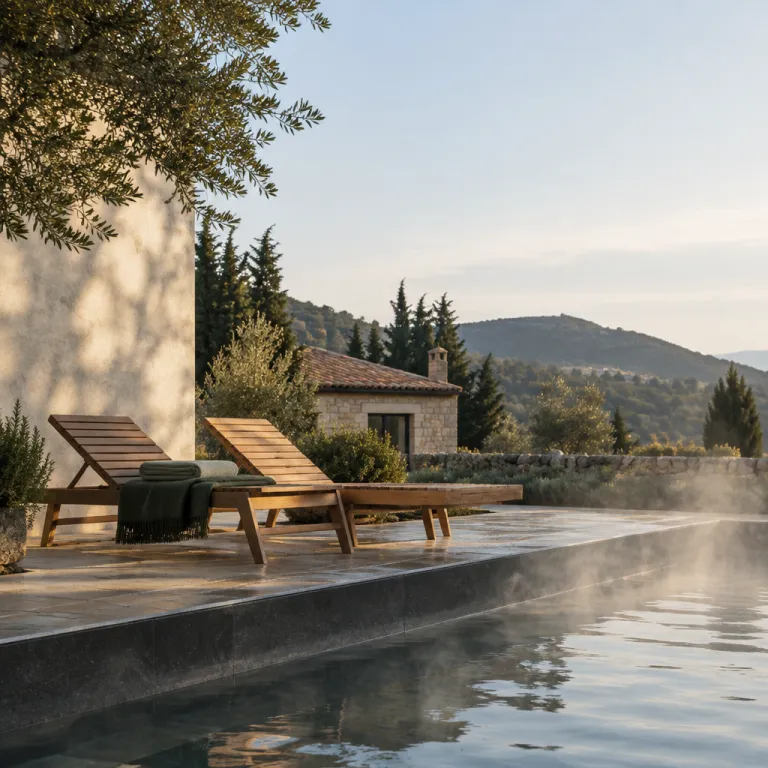
The thermal north of Croatia: a quiet season for serious wellness
Croatia’s thermal belt runs north of Zagreb through the rolling Zagorje hills. Here the focus is not branding but the mineral-rich thermal water rising from deep springs. Locals have treated chronic diseases and stress here for generations, long before wellness became a lifestyle word.
When you drive from Zagreb toward Tuhelj, Krapinske Toplice or Varaždinske Toplice, you leave the Adriatic clichés behind and enter a landscape shaped by hot springs and vineyards. This is where Croatia’s thermal spa culture becomes more medical, with spa centres built around balneology, physiotherapy and long stays rather than just a pretty hotel pool. You will find that every valley seems to hide another set of pools, another cluster of steam rising from a quiet ravine.
The old Habsburg-era sanatoria in places like Krapinske Toplice and Varaždinske Toplice sit beside contemporary Terme resorts, creating a contrast between tiled colonnades and glass-walled spa complexes. In this part of Toplice Croatia, the word “Toplice” itself signals thermal springs and a long bathing culture, from Daruvarske Toplice in the east to Bizovačke Toplice on the Pannonian plain. For travelers used to coastal spas Croatia offers in summer, the inland thermal spa experience feels more grounded, more local and far less seasonal.
From Habsburg cures to contemporary terme resorts
The classic Croatian term “Terme” covers a spectrum from clinical rehabilitation centers to full-scale wellness resorts. At Terme Tuhelj near Tuhelj, for example, the thermal water feeds indoor and outdoor pools, water worlds for families and quieter spa zones for adults. The same pattern repeats at Terme Sveti Martin in Međimurje, where the hotel, golf course and wellness wing sit on top of long-exploited hot springs.
These properties grew from medical roots, and many still treat musculoskeletal diseases, circulation issues and post-injury recovery with serious hydrotherapy programmes. When you book a stay focused on Croatia thermal spa and wellness traditions, you can combine doctor-led treatments with classic spa rituals, alternating between prescribed exercises in a thermal pool and private massages in a quiet suite. A detailed guide to the best spa hotels Croatia offers for luxury and wellness can help you compare which Terme complex leans more medical and which leans more leisure-focused.
Names repeat across the map, so it helps to understand the geography before you travel. Terme Tuhelj lies in Zagorje, about 45 kilometres or roughly 45 minutes by car from central Zagreb, while Terme Sveti Martin sits further north near the village of Sveti Martin na Muri, around 110 kilometres and about an hour and a half away. Terme Jezerčica, close to Donja Stubica, uses thermal water from its own springs, and together these thermal spas form a corridor of wellness stretching from Aquae Vivae in Krapinske Toplice to the quieter pools of Daruvarske Toplice and Bizovačke Toplice further east.
What thermal water offers beyond a hotel spa pool
There is a clear difference between a heated hotel pool and a true thermal spa fed by natural hot springs. In Croatia’s Toplice belt, the thermal water emerges mineral-rich and naturally hot, often between 30 °C and 60 °C depending on the spring, then flows directly into pools designed for both relaxation and therapy. Locals come for weeks, not weekends, because the cumulative effect on chronic pain, circulation and stress is the point.
At Aquae Vivae in Krapinske Toplice, the complex of indoor and outdoor pools uses thermal water that has been analysed for its mineral composition and therapeutic potential; local medical literature notes high levels of calcium, magnesium and hydrogen carbonates in several Zagorje springs. Similar stories play out at Aquae Vivae’s regional cousins, from the family-friendly slides at Terme Tuhelj to the quieter wellness zones at Terme Sveti Martin and Terme Jezerčica. For travelers used to coastal spas Croatia promotes in summer, this inland Croatia thermal experience feels more elemental, more about the water than the décor.
Outdoor pools become especially atmospheric in winter, when steam rises from hot water while the air stays cold and clear. You will find that swimming outside at night in places like Sveti Martin or Tuhelj, with snow on the surrounding hills, delivers a kind of reset no indoor spa can match. The Međimurje Tourist Board often highlights this contrast, describing the region’s winter pools as “natural open-air inhalation rooms” where hot mineral water meets crisp continental air. For a complementary perspective on open-air rituals, look at how Croatian island retreats approach outdoor wellness, then contrast that with the thermal focus inland using a refined guide to outdoor wellness on Croatia’s islands as a reference point.
Pairing thermal cures with autumn kitchens and vineyard roads
Part of the appeal of Croatia thermal spa wellness in the north is how easily you can fold it into a wider gastronomic trip. After morning sessions in a thermal spa pool, you can spend afternoons driving quiet vineyard roads and evenings in traditional restaurants. The rhythm suits business travelers extending a Zagreb meeting into a long weekend, or couples looking for a low-season reset without long-haul flights.
Zagorje and Međimurje kitchens lean into autumn and winter, when game, mushrooms and slow-cooked stews appear beside local classics like baked štrukli. Many hotels attached to Terme complexes now work closely with nearby wineries, pairing tasting menus with regional whites and lighter reds that match the season. Between sessions in thermal spas, you can schedule a lunch stop in a hillside village, then return to your hotel for a final soak in thermal water before bed.
Those who know the coast can also link inland wellness with a refined restaurant itinerary on the islands, using a curated guide to Hvar restaurants for luxury hotel guests as a coastal counterpoint. In practice, that might mean a few days of Croatia thermal immersion in Krapinske Toplice or Varaždinske Toplice, followed by a short hop to the Adriatic once ferries and flights align. The contrast between steam-filled pools in Toplice Croatia and sunlit terraces by the sea makes the country feel larger, more layered and more suited to repeat travel.
Planning a thermal belt stay: who it suits and how to book
The Croatia thermal spa wellness belt works especially well for executives who already travel to Zagreb for work. With most major Terme resorts within ninety minutes of the capital, you can finish meetings, pick up a rental car and be in a hot pool before dinner. This proximity also makes short, focused wellness breaks realistic for American travelers connecting through European hubs.
When choosing between Terme Tuhelj, Terme Sveti Martin, Terme Jezerčica, Daruvarske Toplice, Bizovačke Toplice or other Toplice Terme, start by deciding how medical you want the stay to be. Some complexes retain a strong rehabilitation focus, with doctors on site and programmes aimed at specific diseases, while others position themselves more as leisure hotels with large spa zones and water parks. You will find that spas Croatia offers in this belt can usually provide both, but the balance between clinical and indulgent varies by property and even by wing within the same hotel.
For couples, the quieter wings of Terme Sveti Martin or smaller properties in Istria’s Istarske Toplice region can feel more intimate, especially outside school holidays. Families might prefer the larger water worlds at Terme Tuhelj or Aquae Vivae, where multiple pools and slides keep children occupied while adults rotate between saunas and wellness treatments. Whatever you choose, the essence of Croatia thermal is the same: hot springs, clean air and a pace that encourages you to stay put rather than chase sights.
FAQ
Where is Croatia’s thermal belt located?
Croatia’s thermal belt runs north and northeast of Zagreb, through the Zagorje and Međimurje regions and across parts of the Pannonian plain. Key spa towns include Krapinske Toplice, Varaždinske Toplice, Tuhelj, Sveti Martin na Muri, Daruvar and Bizovac. These areas are known for natural hot springs, established Terme complexes and a long tradition of medical and leisure bathing.
What is the difference between a thermal spa and a regular hotel spa?
A thermal spa in Croatia uses natural thermal water from underground hot springs, often with a documented mineral composition and therapeutic indications. Regular hotel spas typically heat mains water for pools and focus more on relaxation than on medical benefits. In the thermal belt, many Terme complexes combine clinical hydrotherapy for specific diseases with classic wellness facilities such as saunas, massages and relaxation zones.
Is the thermal belt suitable for a short business leisure break?
Yes, the proximity to Zagreb makes the thermal belt ideal for executives extending work trips. Most major Terme resorts are within about ninety minutes by car from the city, so you can add two or three nights of Croatia thermal spa wellness without complex logistics. Many hotels offer strong Wi‑Fi, meeting spaces and quiet lounges, allowing you to balance remote work with daily time in pools and wellness areas.
Can families enjoy Croatia’s thermal spas in winter?
Families are well catered for at larger complexes such as Terme Tuhelj, Aquae Vivae and some sections of Terme Sveti Martin. These properties usually offer multiple indoor pools, slides and children’s areas, alongside adult-only wellness zones. Winter can be especially atmospheric, as children enjoy warm water and play zones while adults alternate between saunas, hot pools and quiet relaxation rooms.
Do I need medical supervision to use Croatian thermal spas?
General use of pools and wellness facilities at Croatian thermal spas does not require medical supervision. However, if you plan a structured therapeutic stay targeting specific conditions such as joint diseases or post-injury rehabilitation, it is wise to consult your doctor and then book a programme that includes on-site medical assessment. Many Terme complexes in the thermal belt maintain medical teams who can tailor treatments to your needs once you arrive.