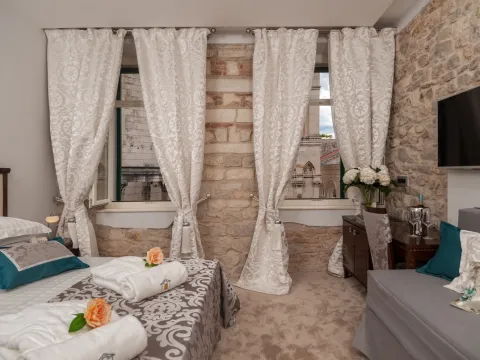
Discover the best areas to stay in Split and the Split Riviera, from heritage hotels inside Diocletian’s Palace to family-friendly beach resorts in Bačvice and Podstrana, with typical price ranges, travel times, and tips for choosing the right neighbourhood.
Old Town Split and Diocletian’s Palace: for heritage and atmosphere
Stone alleys just off Marmontova Street place you inside the living museum of Split. Here, a heritage hotel woven into the walls of Diocletian’s Palace offers rooms where Roman arches frame contemporary design, and where guests enjoy the rare privilege of sleeping inside a UNESCO site while still having a quiet, air conditioned refuge from the crowds. Layouts are usually compact rather than sprawling suites, but the sense of history and the central location compensate for the lack of large-scale facilities.
Within the palace and the streets around Peristil Square, accommodations tend to prioritise character over facilities. You may find a small terrace tucked above a Renaissance courtyard, a discreet bar in a former stone cellar, or a restaurant serving Dalmatian seafood under centuries-old vaults. Outdoor swimming pools and hot tub decks are unusual in this dense urban fabric; the trade-off is immediate access to the cathedral, the waterfront Riva, and the city’s best heritage landmarks. Typical options include Heritage Hotel Antique Split (4-star, mid to upper price range, intimate rooms overlooking Peristil, usually from around €150–€250 per night in high season) and Hotel Vestibul Palace (4-star, upper range, boutique suites set inside the emperor’s former residence, often from roughly €220–€350 in summer, depending on dates and availability).
This area suits travellers who want to walk everywhere. From most hotels located in Split’s Old Town, you reach the Riva promenade in under 5 minutes on foot, the ferry port in about 10 to 12 minutes, and the green slopes of Marjan Hill in roughly 20 to 25 minutes. A taxi from Split Airport to the palace district usually takes 30 to 40 minutes depending on traffic, based on typical transfer estimates published by local taxi and shuttle companies. If you value free, private parking or a large swimming pool, you will be better served just outside the historic core, but for atmosphere and sense of place, the palace district remains unmatched.
Quick compare – Old Town Split
Pros: UNESCO-listed setting, walkable to all major sights, authentic stone architecture, strong restaurant choice.
Cons: Smaller rooms, limited parking, few pools, more steps and cobblestones.
Riva waterfront and city centre: urban energy by the sea
Palms, polished stone, and the constant murmur of conversation define the Riva. Hotels facing this seafront promenade offer front-row views of the harbour, with rooms overlooking the islands and the bell tower of Diocletian’s Palace. Guests staying here enjoy easy access to cafés, wine bars, and the city’s liveliest restaurant scene, often just an elevator ride and a short stroll away from their city hotel lobby.
Compared with the tight courtyards inside the palace, city-centre properties along Obala Hrvatskog narodnog preporoda and the parallel streets can offer slightly larger rooms and more conventional layouts. Expect flat screen televisions, well-insulated, air conditioned interiors, and a clearer separation between sleeping and living areas. Some star hotel options add a rooftop terrace or seasonal outdoor lounge where you can watch ferries glide out towards Brač and Hvar at sunset. Popular choices include Cornaro Hotel (4-star, upper mid-range, known for its rooftop bar with panoramic views, with typical summer rates from about €180–€280 per night) and Hotel Luxe (4-star, mid-range, compact design rooms a short walk from both the Riva and the ferry terminal, often priced from roughly €120–€200 in peak season).
The compromise here is noise and movement. The Riva is the city’s social stage, especially in summer, so travellers who prefer absolute quiet may want a room facing an inner courtyard rather than the main promenade. For a short city break, or for guests using Split as a hub before or after island hopping, this central zone offers the most efficient combination of location, services, and access to Split Airport transfers and the ferry terminal. Walking time from most Riva hotels to the bus station and ferry pier is around 8 to 10 minutes, and airport shuttle buses typically take 35 to 40 minutes to reach the city centre according to standard timetables.
Quick compare – Riva and city centre
Pros: Sea views, lively nightlife, easy ferry and bus access, larger choice of modern hotels.
Cons: Street noise in high season, limited beach access, higher prices for waterfront rooms.
Bačvice and city beaches: for sea, sand, and a short walk to town
Fine sand and shallow water make Bačvice Beach the city’s summer playground. Hotels in this area place you within a few minutes’ walk of the sea while keeping the Old Town roughly 10 to 15 minutes away on foot along the waterfront. It is a practical choice if you want to swim before breakfast and still dine in the historic centre at night, especially for families seeking Split beach hotels with easy access to the city.
Properties around Bačvice and the neighbouring Firule cove tend to feel more resort-like than those in the palace quarter. You are more likely to find a swimming pool, a small spa area with a hot tub, or a terrace bar facing the Adriatic. Rooms often come with balconies, some with partial sea views, and layouts that suit both couples and families. Many hotels in this zone also provide private parking, which is valuable if you plan day trips along the coast. Representative options include Hotel Park Split (5-star, upper price band, historic grand hotel above Bačvice with pool and spa, with high-season rates commonly from around €230–€350 per night) and Hotel Villa Diana (3-star, mid-range, family-run with simple rooms and convenient access to both beach and port, often from roughly €90–€150 depending on season).
The atmosphere is relaxed rather than overtly glamorous. Expect families playing picigin in the shallows, locals walking dogs along the promenade, and a handful of casual beach restaurants serving grilled fish and simple pasta. If you are seeking a very quiet, adults-only environment, this may not be ideal in peak season; if you want a city stay that still feels like a holiday by the sea, Bačvice is one of the most balanced choices in the Split region. A taxi from Bačvice to the Riva usually takes around 5 minutes, while transfers to Split Airport average 30 to 40 minutes depending on traffic, in line with typical local taxi company guidance.
Quick compare – Bačvice and city beaches
Pros: Easy swimming, family-friendly shallows, short walk to Old Town, better chance of parking and pools.
Cons: Busier in summer, nightlife noise near the beach, fewer pure heritage buildings.
Podstrana and the Split Riviera: resort comfort on the water
Drive about 8 km southeast along the coast and the city thins into a string of seaside settlements. Podstrana, one of the closest, concentrates several of the Split region’s larger resort-style hotels directly on the beach. Here, guests enjoy long pebble stretches, clear water, and the feeling of being away from the city without losing it entirely; Split remains close enough for an evening in town or a day of sightseeing.
Compared with compact city properties, resorts in this area typically offer more generous outdoor swimming pools, landscaped sun decks, and direct beach access. Rooms are often larger, with a clearer resort layout: sea-facing balconies, family rooms, and a choice of on-site restaurant and bar options. Many provide private parking as standard, which simplifies arrivals for those driving down the coast from Zadar or up from Dubrovnik. Well-known examples include Le Méridien Lav Split in Podstrana (5-star, upper price band, full-service resort with marina, spa, and multiple pools, with summer prices frequently from about €250–€400 per night) and Hotel Eden (4-star, mid-range, smaller property with sea views and a quieter feel, often from roughly €110–€180 depending on season and room type).
This coastal strip suits travellers who prioritise space and facilities over immediate heritage. You will not step out of your room into Diocletian’s Palace, but you may have a lounger almost at the water’s edge and a seasonal outdoor pool complex that keeps both adults and children content. For longer stays, or for guests who want a beach hotel base while exploring the wider Split-Dalmatia region, Podstrana and its neighbours offer a comfortable compromise. Driving time from Podstrana to central Split is usually 15 to 25 minutes by car or taxi, while regional buses run along the main coastal road with journey times of around 25 to 35 minutes according to published schedules.
Quick compare – Podstrana and Split Riviera
Pros: Beachfront resorts, larger pools and gardens, easier parking, quieter evenings than the city centre.
Cons: Requires transport into Split, fewer historic sights on the doorstep, less walkable nightlife.
Marjan, Meje and residential Split: discreet stays with a local feel
West of the centre, the road along the base of Marjan Hill curves past small coves and pine trees. The residential neighbourhoods of Meje and the lower Marjan slopes host a quieter style of hotel split experience, with smaller properties and villa-style accommodations set back from the main tourist flow. Here, the city feels more lived-in, less staged, and daily life continues around you.
Rooms in this part of Split often trade direct heritage views for greenery and partial sea glimpses. Terraces might overlook gardens rather than the harbour, and the nearest bar could be a local café on Šetalište Ivana Meštrovića rather than a polished cocktail spot on the Riva. For guests who value morning runs under pine trees, or who prefer to swim from rocky coves instead of a busy city beach, this area has a distinct appeal. Typical stays include small guesthouses and apartments, along with a handful of boutique villas that offer self-catering kitchens and private terraces for longer visits.
Access to the Old Town is still straightforward, usually a short taxi ride or a 20 to 30 minute walk depending on your exact location. This makes Marjan-side stays suitable for travellers who want to dip into the city’s energy but retreat to a calmer base. If you are comparing options, choose this zone when privacy, a slower rhythm, and a more residential atmosphere matter more than being steps from the palace or Bačvice Beach. Taxis from this area to the ferry port generally take 10 to 15 minutes, and airport transfers average around 35 minutes according to common transfer estimates.
Quick compare – Marjan and Meje
Pros: Local neighbourhood feel, access to pine forests and walking trails, quieter coves for swimming, good for longer stays.
Cons: Fewer full-service hotels, some uphill walking, longer walk back from the Old Town at night.
How to choose the right hotel in the Split region
Deciding where to stay in the Split region starts with one question: city first, or sea first. If your priority is heritage, restaurants, and the texture of daily life, focus on hotels located in Split’s Old Town and the streets immediately around Diocletian’s Palace. If you imagine long days by the water with only occasional forays into the centre, look to Bačvice, Podstrana, or other coastal settlements along the Split Riviera, including family-friendly beach hotels and larger resorts.
Once you have chosen your area, refine by facilities. Travellers who value a swimming pool, a hot tub, or extensive outdoor swimming areas will usually find better hotel offers outside the palace walls, where space allows for larger complexes. Those who care more about character may accept smaller rooms and fewer amenities in exchange for a heritage hotel setting. In all zones, expect modern comforts such as air conditioned interiors and contemporary room fittings like flat screen televisions in most mid to upper-range star hotel categories. When browsing listings, pay attention to whether breakfast is included, if there is an on-site restaurant, and how far the property sits from the nearest bus stop or ferry pier.
Finally, consider logistics. If you are arriving late at Split Airport or planning frequent day trips by car, properties with reliable, private parking on the city’s edge or along the coast can simplify your stay. If you are travelling mostly on foot or by ferry, a central city or Riva address will save time. The Split region is compact enough that no choice is wrong; the best hotel for you is the one whose location and atmosphere match the way you actually want to spend your days. When you look at photos, imagine your daily routine: walking to the beach, catching a catamaran to Hvar, or climbing Marjan for sunset.
Is the Split region a good choice for a first stay in Croatia ?
Yes, the Split region works very well for a first stay in Croatia because it combines a lively historic city, easy access to islands, and a range of hotel styles from heritage properties to relaxed beach accommodations. You can explore Diocletian’s Palace, enjoy city restaurants and bars, and still reach beaches or day trips along the coast without long transfers. Ferries and catamarans connect Split with islands such as Brač, Hvar, Šolta, and Vis, making it simple to add island-hopping to a short city break.
Where should I stay in Split if I want both beach and city ?
If you want both beach time and city life, look at hotels near Bačvice Beach or along the waterfront between the ferry port and Firule. From there you can walk to the Old Town in about 10 to 15 minutes while having quick access to swimming spots, seaside cafés, and a more resort-like atmosphere than inside the palace walls. This zone also works well if you are travelling with children and want shallow water without giving up evening strolls through Diocletian’s Palace.
How far is Podstrana from central Split, and who is it best for ?
Podstrana is roughly 8 km from central Split, close enough for a short drive or taxi ride into the city. It suits travellers who prefer larger resort-style hotels with pools, direct beach access, and easier parking, and who are happy to visit the Old Town for selected outings rather than stay in the middle of the historic area. Allow around 15 to 25 minutes by car to reach the Riva from most Podstrana hotels, slightly longer in peak summer traffic.
Is it better to stay inside Diocletian’s Palace or just outside the Old Town ?
Staying inside Diocletian’s Palace offers unmatched atmosphere and proximity to heritage sites, but rooms are often smaller and facilities more limited. Hotels just outside the Old Town, near the Riva or on surrounding streets, usually provide slightly larger rooms and more conventional amenities while still keeping you within a short walk of the palace and main city attractions. For many visitors, a compromise is to choose a boutique hotel on the edge of the pedestrian zone, gaining easier luggage access and quieter nights without losing the historic setting.
Which area is best if I plan to rent a car in the Split region ?
If you plan to rent a car, consider staying on the edge of the centre, near Bačvice, or in coastal settlements such as Podstrana where hotels are more likely to offer private parking. These locations make it easier to drive in and out for day trips while still allowing reasonable access to Split’s restaurants, bars, and cultural sites. When booking, check whether parking is on-site or in a nearby public garage, and factor in that driving into the pedestrianised Old Town is restricted, so a short walk from your car to the hotel is normal.