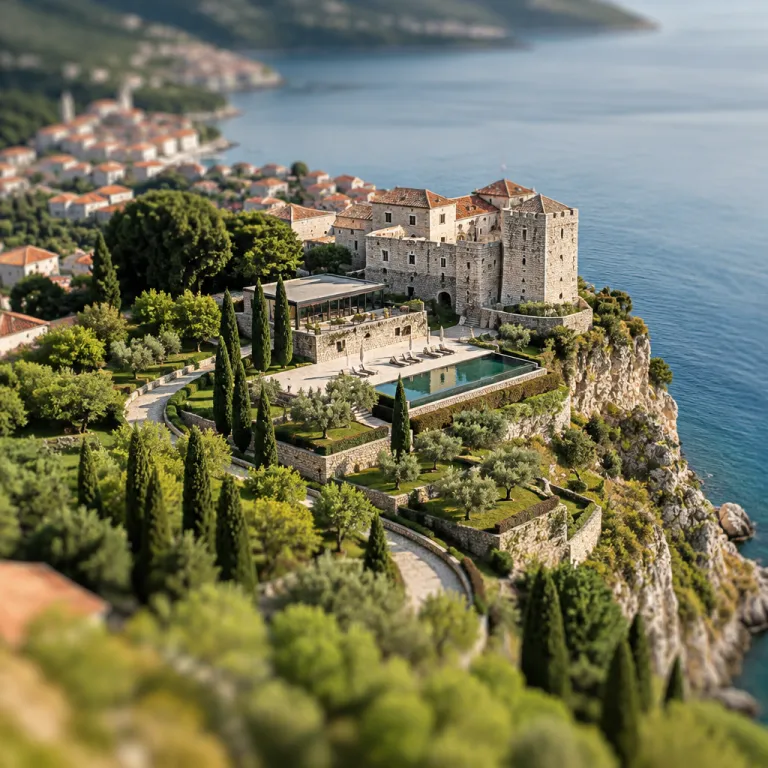
Castles in Croatia for luxury stays in historic towns
Staying near castles in Croatia lets you pair deep-rooted heritage with refined comfort. In almost every historic town where a medieval stronghold once dominated the skyline, you now find polished five star hotels and intimate luxury guesthouses. Many of these properties sit within walking distance of a fortress or a noble family palace, so you can sleep in contemporary elegance while waking to views of a Croatian castle rising above tiled roofs.
Along the northern routes, each castle located in a quiet valley or on a wooded hill is usually linked to a former noble estate that once controlled the surrounding county. These fortified residences were often rebuilt over several centuries on older ramparts, which means your hotel search should focus on layered historic districts where a medieval fortress, a baroque style manor, and a later defensive work stand almost side by side. When you choose a luxury hotel in such a town, you gain effortless access to the main heritage site while enjoying curated services like private guides, chauffeured transfers, and tasting menus inspired by regional recipes.
In coastal Croatia, many castles and fortress walls frame the sea, so premium hotels emphasize terraces and suites that face the water. A stronghold built on a rocky headland often anchors the skyline, while the surrounding grad or fortified quarter has evolved into a pedestrian zone filled with cafés and discreet hotel entrances. For travelers comparing castles in Croatia, it makes sense to shortlist properties that highlight the local fort’s story in their design, whether through restored stonework, curated art, or partnerships with nearby museums and conservation teams.
Dubrovnik and its fortresses: where to stay near the walls
Dubrovnik is the most famous Croatian town for travelers interested in castles in Croatia, even though its identity is shaped more by massive walls and a seafront fortress than by a single hilltop keep. The medieval defense system here includes the imposing Lovrijenac fort, the Bokar tower, and several bastions that were expanded over several centuries to protect the maritime republic. When you book a luxury hotel in Dubrovnik, the key is to balance proximity to this UNESCO listed site with enough distance from the busiest gates to preserve peace and privacy.
Inside the old town, many premium properties occupy former noble family mansions, where baroque staircases and stone courtyards echo the city’s golden age. These mansions are not castles in the strict sense, yet they share the same Croatian architectural vocabulary of thick walls, carved portals, and compact grad layouts shaped by defense needs. A carefully chosen hotel here lets you step from your suite to the ramparts in minutes, then retreat from the crowds while still feeling the presence of every fortress and tower that once guarded this Adriatic harbor.
Travelers who prefer more space often look just beyond the walls, where sea facing hotels offer panoramic views of the entire medieval fortress line and the offshore strongholds that protected Dubrovnik’s approaches. For a detailed breakdown of neighborhoods and hotel styles, consult a specialist guide on where to stay in Dubrovnik beyond the old town walls. From these vantage points, you can watch the light change on every stone curtain, then walk or take a short transfer into town for private evening tours of the walls, bastions, and nearby castle like residences that once housed the city’s ruling elite.
Varaždin and northern baroque elegance near Trakošćan Castle
In northern Croatia, the town of Varaždin offers a different way to experience castles in Croatia, with a focus on baroque elegance and quieter streets. The historic grad Varaždin core is dominated by a white walled medieval fortress that later evolved into a refined residence, while nearby Trakošćan Castle rises above a lake and landscaped park. Luxury and premium hotels in Varaždin county tend to occupy restored townhouses or villas, giving guests easy access to both the urban castle and the countryside estates.
Trakošćan Castle is one of the most photographed castles in Croatia, a well preserved hilltop stronghold located about 40 kilometres from Varaždin. This residence began as a medieval fortress and was gradually transformed into a romantic castle by a noble family, with interiors that showcase period furniture, portraits, and weapons. When you book a high end hotel in grad Varaždin, you can arrange private transfers to Trakošćan Castle, timed to reach the site early or late in the day for quieter visits and softer light on the baroque style facades and towers.
Many travelers pair Varaždin with excursions into the rolling hills of Varaždin county, where smaller castles in Croatia such as Veliki Tabor and the fortress at Novi Dvori are scattered among vineyards and forests. A luxury hotel concierge can help you plan a route that links each castle built in a different era, from Gothic cores to later baroque wings, while also suggesting scenic stops in villages and wine estates. For those who enjoy walking historic streets at calm hours, resources like a guide to old towns at their quietest hours can be invaluable when planning how to experience Varaždin’s medieval fortress and baroque squares without the daytime rush.
From Gorski Kotar to Veliki Tabor: castles between forests and hills
Travelers who associate castles in Croatia only with the coast often overlook the dramatic landscapes of Gorski Kotar and the inland hills. This mountainous region, located between the Adriatic and the continental plains, is dotted with smaller forts and castle sites that once guarded trade routes and passes. While Gorski Kotar is better known for nature lodges than for grand castles, it forms a scenic corridor toward some of the most atmospheric strongholds in Croatia, including Veliki Tabor and the fortifications around Zagorje.
Veliki Tabor is a striking fortress located on a hilltop, with rounded towers and thick walls that reflect its role as a medieval stronghold and later noble residence. The complex was gradually expanded over several centuries, so visitors can trace how each construction phase added new defensive and residential elements. Luxury travelers often base themselves in premium countryside hotels or vineyard estates within an hour’s drive, using private drivers to reach Veliki Tabor early in the morning, when the site is quiet and the views over the county hills are clearest.
Combining Gorski Kotar with the castle region around Veliki Tabor allows you to alternate forest hikes with cultural visits, an appealing mix for guests who value both wellness and heritage. A well preserved fort or castle located on a ridge becomes a natural focal point for day trips, while evenings are spent in spa suites, wine cellars, or fine dining rooms that reinterpret traditional Croatian recipes. For travelers who have already explored the coast, curated itineraries that link castles in Croatia with stone villages and inland landscapes, such as those described in guides to the stone villages behind Rovinj in inland Istria, can inspire similar journeys through the lesser known castle belts of the interior.
Klis Fortress, Nehaj Fortress and coastal strongholds with sea views
Several of the most dramatic castles in Croatia are actually fortress complexes that command sea approaches and inland passes. Klis Fortress, located above Split, is a classic example of a medieval stronghold that later gained fame through film and television, yet its real story spans many centuries of Croatian and regional history. The layers here include Illyrian, Roman, medieval, and Ottoman phases, making it an ideal day trip for guests staying in luxury hotels along the Split Riviera.
Nehaj Fortress in Senj is another powerful symbol of coastal defense, a square fort built on a hill that overlooks both the town and the channel between the mainland and nearby islands. This fortress was rebuilt over time on earlier fortifications, and today it stands as a well preserved site where visitors can climb the walls and imagine the life of soldiers who guarded the coast. Premium hotels in Senj and along the northern Adriatic often arrange private sunset visits, allowing guests to experience Nehaj Fortress when the stone glows warm and the sea below turns deep blue.
Along the Dalmatian coast, smaller castles in Croatia and fortified towers appear in towns such as Šibenik, Zadar, and smaller harbors where a castle located near the waterfront once controlled trade and fishing rights. Many of these sites combine a compact fort or castle with a baroque style church or square, creating layered townscapes that reward slow exploration. When choosing a luxury hotel in these areas, look for properties that offer guided excursions to both Klis Fortress and Nehaj Fortress, as well as to lesser known forts, so you can compare how each stronghold built in a different century reflects local materials, strategic needs, and the ambitions of the noble family or rulers who commissioned it.
Stari Grad, Novigrad and other historic towns shaped by castles
Several Croatian towns literally grew around a castle or fortress, and staying in or near these historic cores offers a strong sense of place. On the island of Hvar, Stari Grad is one of the oldest towns in Croatia, with layers of Greek, Roman, and medieval history that include fortified residences and small castle like structures. While the main fortifications here are more modest than a hilltop castle, the grad layout, narrow streets, and stone houses still reflect centuries of defense and noble family influence.
On the mainland, Novigrad on the Dalmatian coast and Novigrad in Istria both feature castles in Croatia that once controlled bays and river mouths. The Novigrad fortress in Dalmatia, sometimes referred to as Novigrad Dobri in older sources, rises above a sheltered inlet, with a castle built to oversee maritime routes and inland valleys. Luxury and premium hotels in these towns or nearby resorts often highlight the local castle’s story in their guest experiences, offering boat trips that circle the fort, wine tastings in former granaries, or private access to viewpoints where the entire medieval fortress line can be seen at once.
In several of these towns, especially Stari Grad and the Istrian Novigrad, baroque style churches and palaces stand close to older fortifications, creating a visual dialogue between different eras. A castle located on a promontory may be paired with a later baroque square at its base, while mid twentieth century renovations added new facades and interiors that now host galleries, restaurants, or cultural centers. When you book a high end hotel in or near these towns, ask the concierge to arrange guided walks that connect each castle built in a different century, so you can understand how Croatian coastal communities evolved from fortified settlements into elegant seaside destinations.
How to choose luxury hotels around castles in Croatia
Selecting the right luxury hotel near castles in Croatia starts with clarifying how close you want to be to the historic core. Some travelers prefer to stay inside a walled grad or next to a medieval fortress, accepting cobbled streets and limited vehicle access in exchange for atmosphere. Others choose a castle located on a nearby hill or a coastal fort as a day trip destination, while sleeping in a resort style property with pools, spa facilities, and direct beach or countryside access.
When comparing options, pay attention to how each property engages with its surrounding castle or fortress site. A hotel that simply uses a nearby landmark as a marketing image offers a different experience from one that funds conservation work, curates exhibitions about the noble family who once lived there, or organizes private tours of the stronghold above town. In destinations such as Dubrovnik, Varaždin county, and the regions around Klis Fortress or Nehaj Fortress, the most rewarding stays usually come from hotels that treat the local fort or baroque style palace as an extension of their guest experience.
It is also worth considering seasonality and timing, especially in towns where castles in Croatia attract large day trip crowds. Staying in or near grad Varaždin, Stari Grad, or a coastal town with a well preserved medieval fortress allows you to visit the main castle located in the center early in the morning or late in the evening, when the light is soft and the streets are quieter. By aligning your hotel choice with your interest in history, architecture, and Croatian culture, you can turn each landmark, from Trakošćan Castle and Veliki Tabor to Novigrad Dobri and the forts above Dubrovnik, into a memorable part of a refined and deeply contextual journey.
Key figures about castles in Croatia and heritage travel
- Croatia counts more than 1,000 registered castles, forts, and manor houses, according to estimates by the Croatian Conservation Institute, with several hundred classified as nationally significant heritage sites.1
- UNESCO lists ten World Heritage properties in Croatia, and at least three of these include major fortifications or castle like complexes, such as the Old City of Dubrovnik and the Episcopal Complex of the Euphrasian Basilica in Poreč.2
- Before global travel disruptions, Croatia welcomed over 20 million international tourist arrivals annually, and cultural heritage visits, including trips to castles and fortresses, represented a steadily growing share of overnight stays.3
- Trakošćan Castle receives on the order of 100,000 visitors per year, making it one of the most visited castles in Croatia and a key anchor for luxury and premium tourism in Varaždin county and the surrounding regions.4
- Studies by the Croatian National Tourist Board indicate that travelers who prioritize cultural and historic experiences, such as visiting castles and medieval fortress sites, tend to spend more per day on accommodation and guided services than beach focused visitors.3
FAQ about castles in Croatia and luxury hotel stays
Which Croatian towns are best for luxury stays near castles ?
Dubrovnik, Varaždin, Split, and the coastal towns around Šibenik and Zadar are among the best choices for luxury stays near castles in Croatia. Dubrovnik offers monumental walls and forts, Varaždin provides access to Trakošćan Castle and a baroque old town, while Split gives easy access to Klis Fortress. Smaller destinations such as Stari Grad on Hvar and Novigrad in Istria also combine historic cores with premium accommodation options.
Can you stay overnight in a Croatian castle itself ?
Only a small number of castles in Croatia currently operate as accommodation, and most high end stays are in nearby historic mansions or villas rather than inside the main castle. Many castles, such as Trakošćan Castle and Veliki Tabor, function primarily as museums and heritage sites with strict conservation rules. Luxury travelers typically book hotels within a short drive or walk, then arrange private tours or special access experiences at the castle.
How much time should I plan for visiting a major Croatian castle ?
For a large castle or fortress complex such as Trakošćan Castle, Klis Fortress, or the walls of Dubrovnik, plan at least half a day to explore comfortably. This allows time for guided tours, museum rooms, and walking the ramparts or surrounding grounds without rushing. Smaller forts and castles in Croatia can often be visited in one to two hours, which makes it easy to combine several sites in a single day from a central luxury hotel base.
Are Croatian castles suitable for families staying in luxury hotels ?
Many castles in Croatia are very suitable for families, especially when combined with the services of a family friendly luxury hotel. Children often enjoy climbing towers, exploring courtyards, and hearing stories about knights, nobles, and historical battles. Hotels can arrange child focused guides, flexible transport, and picnic style meals so that visits to castles and fortresses remain engaging and comfortable for all ages.
When is the best season to visit castles in Croatia while avoiding crowds ?
The shoulder seasons of late spring and early autumn usually offer the best balance between pleasant weather and manageable visitor numbers at castles in Croatia. Even in busier months, staying in or near historic towns allows you to visit major sites early in the morning or in the evening, when day trip groups have left. Luxury hotels often help guests schedule off peak visits and arrange private access where possible, especially at high profile castles and fortress complexes.
References
- Croatian National Tourist Board
- Croatian Conservation Institute
- UNESCO World Heritage Centre