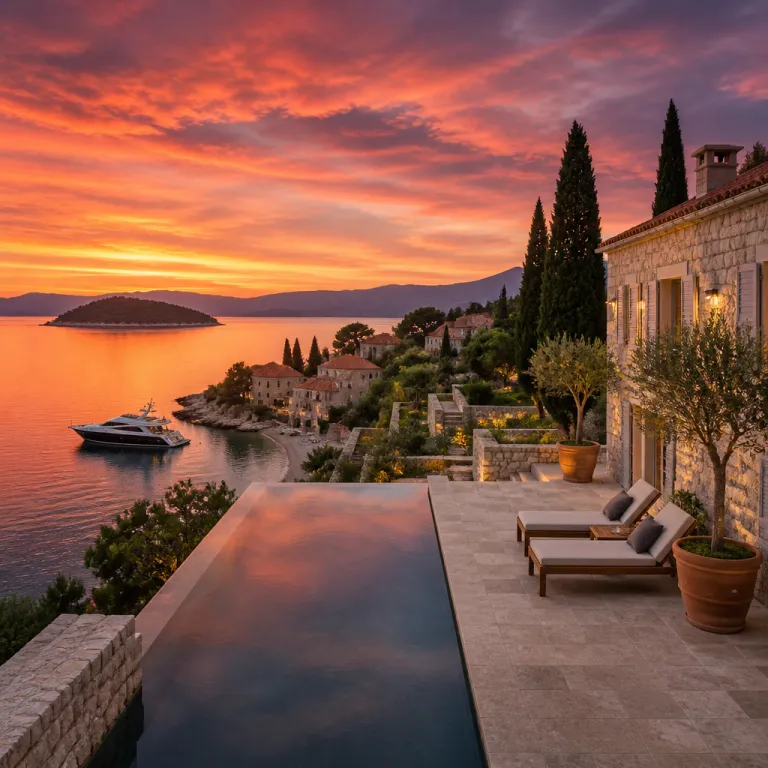
Otok Šipan as a discreet luxury escape near Dubrovnik
Otok Šipan is the largest inhabited island in the Elaphiti archipelago, offering a serene alternative to busy Dubrovnik. This elegant Croatian island attracts travelers who value privacy, attentive yet unobtrusive service, and a slower rhythm of travel. Many guests choose Šipan as their base and then add a few nights in the city for a balanced itinerary.
Šipan lies in the Dubrovnik–Neretva region, about 17 kilometres northwest of Dubrovnik by ferry. According to the Croatian Bureau of Statistics and regional tourism data, the island covers 16.5 km² and has roughly 500 permanent residents, which keeps the atmosphere intimate and well suited to premium accommodation. When you visit this Croatia island, you immediately feel the contrast between the calm of the Elaphiti islands and the energy of the mainland.
Šipanska Luka and Suđurađ are the two principal settlements on otok Šipan, and both villages frame the luxury experience in different ways. Šipanska Luka stretches along a deep bay where yachts anchor in sheltered waters, while Suđurađ feels more compact, with stone houses, a small harbour, and easy access to several island walking paths. Booking platforms sometimes list them as Sipanska Luka and Sudurad, but local signage consistently uses the Croatian spellings.
For travelers comparing Croatian islands, Šipan stands out because it combines historical heritage with a strong agricultural tradition. The island coastline here is gentler than on some other islands, which makes swimming spots more accessible for families and older guests. When you plan your trip with a specialist travel agency, you can easily combine Šipan with Lopud and Koločep, often promoted together as Lopud, Koločep, and Šipan in luxury island-hopping itineraries.
Local tourism partners describe the main attraction succinctly: “What is the main attraction of Šipan?” and answer just as directly: “Historical sites and natural beauty.” This balance between culture and landscape is exactly what high-end guests usually seek from a Croatia island stay. If you value discretion, you will appreciate that Šipan remains less commercial than some better-known Croatian islands and still feels genuinely lived in.
Where to stay on Šipan island for a premium experience
Most luxury-minded visitors choose accommodation in Šipanska Luka or Suđurađ, because both harbours offer direct ferry access from Dubrovnik. Šipanska Luka has a slightly more resort-like feel, with several seafront properties and easy access to the main promenade. Suđurađ feels more traditional and suits guests who want to stay close to local life and the rhythm of the fishing harbour.
Hotel Božica in Suđurađ is one of the best-known upscale hotels on Šipan and often anchors premium packages offered by specialist travel agencies. This Hotel Božica property occupies a small peninsula, with views across the Elaphiti islands and direct sea access for swimming and kayaking. One recent guest described the experience in a local review as “quietly five-star without the fuss,” noting that the Hotel Božica team understands how to balance warm Croatian hospitality with international luxury expectations.
Private villas and restored stone houses are scattered around Šipanska Luka and the hills above Suđurađ, and they work well for families or small groups. Many of these island Croatia villas include private pools, shaded terraces, and concierge-style services arranged through a local agency. When you book through a trusted travel agency, you can request extras such as private chefs, guided walks to Velji Vrh, or tailored boat itineraries around the Elafiti islands.
Well-informed guests study maps of Šipan before they commit to a specific accommodation, because distances on the island can feel longer in the summer heat. Šipanska Luka and Suđurađ are connected by a single main road of about 5 kilometres, and your hotel or villa host will usually arrange transfers. If you plan to explore the olive groves and smaller bays, consider staying near the centre of Šipan to reduce travel time and simplify logistics.
For travelers who prioritise wellness and outdoor relaxation, Šipan fits naturally into wider itineraries focused on island wellbeing. Many guests pair a stay here with other Croatian islands that specialise in open-air wellness, and resources such as this guide to outdoor wellness on Croatia’s islands can help you design a balanced programme. Whatever you choose, confirm ferry schedules and transfer details with your accommodation well in advance, because services can change between seasons.
Šipanska Luka and Suđurađ: choosing the right harbour village
Šipanska Luka is the largest settlement on otok Šipan and feels like a natural choice for guests who enjoy a gentle harbour atmosphere. The bay is long and deep, lined with palm trees, stone houses, and a few carefully restored villas that now serve as refined accommodation. Yachts and small cruisers anchor here overnight, which adds a quiet sense of glamour without overwhelming the village.
Suđurađ, by contrast, is more compact, and many visitors know it as the home of Hotel Božica and several historic buildings. When you walk through Suđurađ, you pass old stone towers, small chapels, and the remains of noble summer residences from the Dubrovnik Republic era. This village suits travelers who want to feel close to local life, with fishermen mending nets and ferries arriving from Dubrovnik several times a day.
Both Šipanska Luka and Suđurađ are located on the southern side of Šipan, facing the other Elafiti islands and the open Adriatic. If you plan a boat trip to Lopud, Koločep, or to more distant Croatian islands, captains will usually suggest starting from whichever harbour is closer to your accommodation. In practice, the distance between the two villages is short, so you can enjoy dinner in one and sleep in the other during a longer stay.
Travelers who enjoy active days often choose Šipanska Luka because it offers easier access to hiking routes towards Velji Vrh, the highest point on the island. From here, you can look across the Elaphiti islands, the Dubrovnik–Neretva coastline, and even towards other parts of southern Croatia on clear days. Those who prefer quieter evenings may lean towards Suđurađ, where the harbour feels more intimate once the last day boat has left.
When you design a wider Croatia island itinerary, Šipan combines well with more glamorous destinations such as Hvar or Korčula. For inspiration on how to balance lively islands with calmer ones, you can consult curated guides like this overview of elegant ways to enjoy Hvar. In many cases, Šipan becomes the restful final stop after a sequence of more energetic island stays.
Olive groves, heritage, and the quiet luxury of Šipan’s landscape
Šipan has long been known for its olive groves, vineyards, and citrus orchards, and this agricultural heritage still shapes the island’s character. When you travel across the interior, you pass dry-stone walls, terraced fields, and countless olive trees that have been tended for generations. Many visitors consider this rural landscape part of the island’s quiet luxury, because it offers space, silence, and a strong sense of continuity.
The production of olive oil on Šipan is not industrial, and that is precisely what appeals to discerning guests who care about provenance. Small family producers harvest olives by hand, press them locally, and often sell limited quantities directly to visitors in Šipanska Luka or Suđurađ. Tasting this olive oil alongside fresh bread and local cheese becomes a simple but memorable highlight of any trip to Šipan.
Historical estates such as those linked to the noble Stjepović Skocibuha family remind guests that Šipan was once a summer retreat for Dubrovnik’s elite. Many of these residences stand among the olive groves, and their stone facades and chapels create a distinctive cultural landscape. When you walk between Šipanska Luka and Suđurađ, you pass several such sites, which combine well with visits to churches and small archaeological remains.
For travelers who value gentle activity, the network of paths through the olive trees offers easy half-day walks. Routes towards Velji Vrh or across the central valley allow you to experience both the agricultural heart of otok Šipan and its coastal views in a single outing. Maps available from local shops or your accommodation will help you choose routes that match your fitness level and the time you have.
Many luxury guests now seek experiences that connect them with local food traditions, and Šipan responds well to this trend. You can arrange tastings, farm visits, or private picnics among the olive groves through your hotel or a specialist travel agency. For broader context on refined coastal stays that integrate gastronomy and landscape, resources such as this guide to Croatian beach elegance and luxury stays can help you frame Šipan within the wider Adriatic scene.
How to reach otok Šipan and move around the Elafiti islands
Reaching otok Šipan is straightforward, and this ease of access is one reason it works so well for luxury short breaks. The island is served by regular ferries and fast boats from Dubrovnik, which connect Šipanska Luka and Suđurađ with the mainland several times a day. Official guidance answers the key question clearly: “How to reach Šipan?” with the simple statement: “By ferry from Dubrovnik.”
When you plan your trip, check current ferry schedules on the operator’s website and book any private transfers through your accommodation or a trusted travel agency. On the main Dubrovnik–Šipan route, Jadrolinija and local fast-boat services typically run more frequently in summer, with morning and late-afternoon departures that take around one hour. Many high-end guests prefer to arrange a private boat trip from Dubrovnik, which allows them to stop at other Elafiti islands such as Lopud and Koločep on the way.
Once you arrive on Šipan, movement is pleasantly limited, which many guests consider part of the charm. A single main road connects Šipanska Luka and Suđurađ, and you can travel between them by taxi, bicycle, or on foot if you enjoy longer walks. Your hotel, villa host, or agency contact will usually help you arrange transfers, especially if you are travelling with luggage or in the heat of the day.
For exploring the other Croatian islands nearby, Šipan works well as a base for day cruises. Captains often propose circuits that include the sandy beaches of Lopud, the green coves of Koločep, and quieter bays on the outer Elafiti islands. If you prefer a more curated experience, ask your travel agency to design a multi-day itinerary that combines Šipan with other island Croatia highlights further north.
Guests who value independence sometimes rent small boats locally, but this option suits only those with appropriate experience and respect for local regulations. For most visitors, organised excursions or private charters provide a safer and more comfortable way to enjoy the surrounding islands. Whatever you choose, allow enough time in your schedule to enjoy Šipan itself, rather than treating it only as a stepping stone between other Croatian islands.
Designing a luxury itinerary that includes Šipan and nearby islands
Šipan fits naturally into a wider luxury itinerary across southern Croatia, especially for travelers who arrive through Dubrovnik. Many guests start with two or three nights in the city, then move to Šipan for a quieter phase of their trip. This sequence allows you to enjoy Dubrovnik’s heritage and dining scene before retreating to the softer rhythm of island life.
From Šipan, you can plan day trips or overnight stays to other Croatian islands, depending on how much time you have. The Elafiti islands of Lopud and Koločep are the closest options, and they combine well with Šipan for gentle coastal walks, swimming, and relaxed lunches. If you wish to go further, your travel agency can arrange transfers to more distant islands such as Mljet, Korčula, or Hvar.
When you design your route, think in terms of contrast, because this is where Šipan excels. After the stone streets of Dubrovnik and the livelier promenades of some islands, Šipanska Luka and Suđurađ feel almost like a private refuge. The limited nightlife and small scale of the villages encourage early mornings, long swims, and unhurried meals featuring local olive oil and seafood.
High-end agencies often build itineraries that include guided walks through Šipan’s olive groves, private tastings, and cultural visits to sites linked with families such as Stjepović Skocibuha. These experiences help you understand how the island’s agricultural past connects with its present role in Croatian tourism. They also provide a richer context for simple pleasures, such as watching the light change over the bay in Šipanska Luka.
For travelers who enjoy comparing destinations, Šipan offers a useful reference point when you think about what you value most in a Croatia island stay. Some guests realise they prefer the quiet elegance of Šipan to busier islands, while others decide to alternate between both styles on future trips. Either way, the island tends to leave a lasting impression of space, authenticity, and understated comfort.
Practical tips for a refined stay on Šipan island
Planning a luxury stay on otok Šipan starts with timing, because the feel of the island changes across the season. Late spring and early autumn usually offer the best balance of warm sea temperatures, quieter ferries, and more attentive service in hotels and restaurants. High summer brings longer days and a livelier harbour scene, but also higher demand for premium accommodation.
When you book, work with a specialist travel agency or directly with your chosen hotel or villa to clarify details. Ask about transfer options from Dubrovnik, luggage handling between Šipanska Luka and Suđurađ, and any private experiences you would like to include. Many properties can arrange bespoke boat itineraries, in-villa dining, or guided walks to viewpoints such as Velji Vrh if you request them early.
Maps of Šipan are useful, but distances can feel different on the ground, especially under the summer sun. Before you commit to a specific accommodation, check how far it is from the harbour, nearest swimming spot, and any restaurants you plan to frequent. Your host will usually be happy to explain the location in detail, because they know that well-informed guests tend to enjoy their stay more.
Pack with the island’s character in mind, focusing on light clothing, comfortable walking shoes, and a slightly smarter outfit for dinners in Šipanska Luka or at Hotel Božica. If you plan to explore the olive groves or climb towards Velji Vrh, bring a hat, sunscreen, and a reusable water bottle, because shade can be limited on some paths. For boat days around the Elafiti islands, a light windbreaker and non-slip shoes will make your time on the water more comfortable.
Finally, allow space in your schedule for unplanned moments, because this is where Šipan often reveals its greatest charm. A spontaneous tasting of fresh olive oil, a quiet swim at sunset, or a conversation with a local producer can become the highlight of your trip. When you leave, you will likely remember not only the views and the accommodation, but also the feeling of having stepped briefly into a slower, more grounded rhythm of Croatian island life.
Key figures and context for Šipan as a luxury destination
- Šipan has an area of 16.5 km², which makes it the largest of the Elaphiti islands near Dubrovnik, yet still compact enough to explore comfortably during a short stay (source: Croatian Bureau of Statistics and regional tourism data).
- The island’s population is around 500 inhabitants, a scale that supports intimate tourism and allows luxury properties to integrate well with local life rather than dominate it (source: Dubrovnik–Neretva County and local tourism offices).
- Šipanska Luka is located at approximately 42.72° N and 17.88° E, placing it within easy ferry reach of Dubrovnik while still feeling distinctly separate from the mainland pace (source: national cartographic records and nautical charts).
- The island’s history spans from Illyrian settlement through the Dubrovnik Republic era to modern tourism development, which explains the mix of archaeological remains, noble estates, and contemporary accommodation (source: local heritage documentation and museum collections).
- Current development strategies focus on sustainable tourism practices, with an emphasis on preserving heritage and supporting local agriculture, especially olive groves and vineyards, to ensure long-term economic and cultural resilience (source: Dubrovnik tourism board and municipal planning documents).
FAQ about luxury stays on otok Šipan
What is the main attraction of Šipan for luxury travelers ?
For luxury travelers, Šipan’s main attraction lies in its combination of historical estates, quiet villages, and unspoiled landscapes. The official local guidance summarises it clearly: “What is the main attraction of Šipan?” with the answer: “Historical sites and natural beauty.” High-end guests appreciate that this beauty is framed by discreet accommodation and a strong sense of authenticity.
How to reach Šipan from Dubrovnik for a premium stay ?
You reach Šipan from Dubrovnik primarily by ferry or fast boat, with services running to both Šipanska Luka and Suđurađ. Many luxury guests arrange private boat transfers through their hotel, villa host, or a specialist travel agency, which allows for a more comfortable journey and optional stops at other Elafiti islands. Whatever option you choose, confirm schedules in advance, especially outside the main summer season.
What activities are available on Šipan for upscale visitors ?
Upscale visitors can enjoy hiking to viewpoints such as Velji Vrh, swimming in clear bays, and sightseeing in villages like Šipanska Luka and Suđurađ. Official information lists the core activities as “Hiking, swimming, and sightseeing.” Many luxury properties can also arrange private boat trips, olive oil tastings, and guided cultural walks tailored to your interests.
Is Šipan suitable for a multi island luxury itinerary in Croatia ?
Šipan is very suitable for a multi-island luxury itinerary, especially when combined with Dubrovnik and nearby islands such as Lopud and Koločep. Its calm atmosphere and agricultural landscape provide a welcome contrast to livelier Croatian islands like Hvar or Korčula. Travel agencies often position Šipan as the restful, nature-focused segment within a broader Croatia island journey.
When is the best time to visit Šipan for a refined experience ?
The best time to visit Šipan for a refined experience is usually late spring or early autumn, when temperatures are pleasant and the island is less crowded. During these periods, service levels tend to be more personalised, and it is easier to secure premium accommodation and private excursions. High summer remains attractive for longer days and warmer seas, but requires earlier booking and more careful planning.